

Executive Summary
In Shiralian v. Wyldewood Creek Inc., 2026 ONCA 163, the Court of Appeal for Ontario reaffirmed the enforceability of carefully drafted limitation of liability clauses in pre-construction real estate agreements. The Court upheld a clause limiting the purchasers’ remedies to the return of their deposits plus applicable interest, even though the developer terminated the agreement after deadlines set out in the Tarion Addendum. The decision stands as a strong endorsement of the freedom of contract, particularly where purchasers are sophisticated parties represented by legal counsel and had the opportunity to negotiate the agreement.
Background
Three purchasers, acting as a partnership investment group, entered into an Agreement of Purchase and Sale (APS) for a pre-construction residential condominium unit in Collingwood, Ontario.
The APS incorporated the mandatory Tarion Addendum, which establishes prescribed timelines by which a developer must either complete construction or validly terminate the transaction. The developer terminated the APS after those deadlines had passed. The purchasers therefore sought damages beyond repayment of their deposits, including alleged lost market appreciation and expectation damages.
Standing against that claim was section 8.07 of Appendix A to the APS, which limited all rights, remedies, and recourse arising from developer default to the return of deposits paid, subject to the interest provisions elsewhere in the APS and Tarion Addendum.
Procedural History
The application judge enforced the limitation of liability clause and held that the purchasers were entitled only to the return of deposits paid and applicable interest. The purchasers appealed.
The Court of Appeal unanimously dismissed the appeal.
Legal Framework: The Tercon Test
The Court applied the three-part framework for exclusion clauses from established in Tercon Contractors Ltd. v. British Columbia, 2010 SCC 4:
- Does the clause, properly interpreted, apply to the circumstances?
- Was the clause unconscionable at the time of contracting?
- Should the clause be unenforceable on overriding public policy grounds?
The Court answered:
- Yes to applicability;
- No to unconscionability; and
- No to public policy concerns.
Why the Clause Was Enforced
- Purchasers Were Sophisticated and Represented by Counsel
The Court emphasized that this was not a vulnerable consumer transaction. The purchasers were experienced, purchased as investors, and negotiated amendments through legal counsel.
Under those circumstances, the developer had no special obligation to specifically highlight the limitation clause. Parties represented by counsel are expected to review and understand the agreements they sign.
- Interest Was Included
The purchasers argued that the clause was unfair because it did not provide for interest on deposits.
The Court rejected that submission, interpreting the APS as a whole. Other provisions of the APS and Tarion Addendum expressly required interest, and those provisions operated alongside the limitation clause.
- Tarion Deadlines Do Not Mandate Additional Damages
The purchasers argued that enforcing the clause would undermine the consumer protection purpose of the Tarion regime. The Court disagreed.
The Court found that the Tarion Addendum prescribes deadlines and disclosure obligations, but does not prohibit parties from contractually allocating damages consequences if those deadlines are breached.
- Freedom of Contract Prevails
The Court reiterated that parties are generally free to allocate commercial risk as they see fit. A poor economic outcome for one side does not justify judicial rewriting of a negotiated contract.
Key Takeaways for Transactional Lawyers
For Developers and Builder-Vendors
- Properly Drafted Limitation Clauses Can Be Enforced
Where clearly written and integrated into the APS, limitation clauses may cap liability even in breach scenarios.
- Legal Representation Strengthens Enforceability
Where purchasers are represented by counsel, arguments based on unfair surprise become substantially weaker.
- Maintain Internal Consistency
Ensure limitation clauses are harmonized with deposit refund, interest, Tarion, and default provisions elsewhere in the APS.
For Purchasers and Purchaser Counsel
- These Clauses Have Real Consequences
A deposit-return remedy may eliminate claims for market appreciation losses, carrying costs, financing losses or consequential damages.
- Negotiate Carve-Outs Where Possible
Consider exceptions for bad faith conduct, intentional breach, fraud, misrepresentation or failure to comply with mandatory statutory obligations.
- Read Schedules and Appendices Carefully
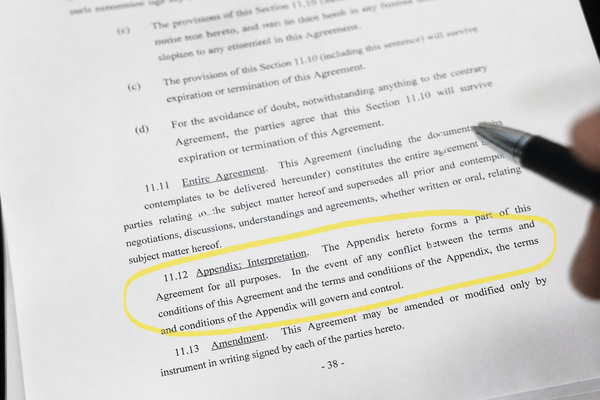
Important risk-allocation clauses are often located outside the main body of the APS.
Practical Drafting Recommendations
- Use plain and prominent language for liability caps;
- Cross-reference interest and refund provisions;
- Require acknowledgements of legal advice;
- Preserve statutory minimum rights;
- Consider tailored remedies rather than blanket exclusions.
Conclusion
Shiralian v. Wyldewood Creek Inc. confirms that Ontario courts will generally enforce negotiated limitation of liability clauses between sophisticated parties.
For transactional counsel, the lesson is clear: when the contract clearly allocates risk, courts are reluctant to disturb the bargain after the market changes.
