

9409394 Canada Inc. v. Ghislain Lascelles, 2026 ONSC 819 | Ontario Superior Court of Justice | February 24, 2026
If you act for buyers and sellers of residential or commercial property in Ontario, you may not spend much time thinking about adverse possession or proprietary estoppel. But a recent Ontario Superior Court decision is a useful reminder that boundary disputes and the legal doctrines that resolve them can surface at the worst possible moment: when your client is trying to sell.
The Facts in Brief
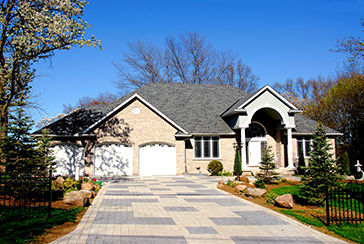
The applicant, 9409394 Canada Inc., purchased a property in 2015. The property had a registered easement over a corridor of the respondent’s neighbouring land, which formed part of the driveway. However, the driveway as actually used and maintained extended beyond the easement and onto an adjacent strip of the respondent’s land, making the driveway roughly 18 feet wide in total.
This arrangement had existed since at least 1993. Over the decades, successive owners of the applicant’s property used the full driveway, paved it with interlocking brick, and maintained and repaired it, all without objection from the respondent. The respondent, for his part, knew the driveway extended beyond the easement and that his land was being used. He said nothing.
The situation came to a head when the applicant listed the property for sale in November 2024. Within weeks, the respondent erected a fence down the centre of the driveway, effectively splitting it in two and damaging some of the interlocking brick in the process.
Two Claims, One Winner
The applicant advanced two arguments: adverse possession and proprietary estoppel. Justice Flaherty dismissed the adverse possession claim but granted relief on the basis of proprietary estoppel.
Adverse Possession: Why It Failed
Because the respondent’s property was registered in the Land Titles system in 2010, the material limitation period ran from 2000 to 2010. The court found that actual, open, and continuous possession during that period was not seriously in dispute. The problem was the requirement that the possession be inconsistent with the true owner’s intended use of the land.
The respondent’s intended use was simply to keep the land vacant. Following binding Court of Appeal authority in Masidon Investments Ltd. v. Ham and Fletcher v. Storoschuk, Justice Flaherty held that using land as a driveway does not interfere with an owner’s intention to hold land vacant. An owner who wants to do nothing with his land is very hard to dispossess by adverse possession, because almost any use by a neighbour is consistent with that passive intention.
The court also refused to apply the mutual mistake exception that can relax the inconsistent-use requirement. Two earlier owners had testified they knew the driveway extended beyond the easement, so there was no mistaken belief that the full driveway was theirs. And the respondent himself clearly understood the boundary. Without mutual or honest unilateral mistake, the stricter inconsistent-use test applied, and the applicant could not meet it.
Proprietary Estoppel: Why It Succeeded
Proprietary estoppel requires three elements: (a) that the respondent encouraged the applicant; (b) detrimental reliance by the applicant to the knowledge of the respondent owner; and (c) that the owner now seeks to take unconscionable advantage of the applicant by reneging on an earlier promise.
The court found all three elements met. The respondent’s silence over more than 30 years, while knowing the full driveway was being used, maintained, and improved, amounted to encouragement through conduct. The applicant relied on this to its detriment. The applicant bought the property expecting access via an 18-foot driveway and made further improvements over time.
On unconscionability, Justice Flaherty found the respondent’s conduct crossed the line by erecting a fence without notice, splitting the driveway in two, damaging the brickwork, and effectively making access hazardous for larger vehicles. After decades of acquiescence, it was unconscionable to suddenly and unilaterally deprive the applicant of access it had reasonably relied upon.
The Remedy and an Unresolved Question
The respondent was ordered to remove the fence immediately and repair the damaged interlocking brick by April 15, 2026. A claim for general damages was dismissed for lack of evidence of non-monetary losses.
Notably, the court left open a significant question: should the disputed strip vest in the applicant as owner, or should it be the subject of a formal easement? The parties were invited to make further submissions if they could not agree. That unresolved point matters enormously for title purposes, and might be worth watching for a follow-up decision.
Practical Takeaways for Transactional Lawyers
This case offers a few lessons worth keeping in mind when acting on real property transactions:
- Survey on purchase. Boundary disputes of this kind often go undetected because driveway surfaces look seamless. An up-to-date survey at the time of purchase and a careful review of it with the client can reveal discrepancies between the registered easement and actual use before they become a problem.
- Silence is not neutral. Landowners who are aware that a neighbour is using part of their property and choose not to object should understand that prolonged acquiescence can give rise to proprietary estoppel claims. If a property owner wants to protect their position, they need to act, not wait decades.
- Driveway access is a material issue. Access to property is fundamental to its enjoyment and value. Where a driveway extends beyond a registered easement, the nature of that additional use should be clarified and documented, ideally before a transaction closes.
- Land Titles registration is not a complete shield. While adverse possession claims against Land Titles properties are difficult, proprietary estoppel is an equitable doctrine that can still be invoked. Registration does not eliminate all risk of a neighbour’s equitable claim.
- Timing matters. The respondent chose to assert his rights at the moment the applicant listed the property for sale. Whether strategic or coincidental, the timing likely influenced the court’s view of unconscionability. Advising property-owner clients to address boundary issues proactively rather than reactively is sound counsel.
The bottom line: a strip of land eight feet wide and a 30-year silence turned into a full hearing before the Ontario Superior Court. These disputes are avoidable with careful due diligence at the transactional stage. When in doubt, survey, verify, and document.
.
