

Shakil v. Heffernan, 2025 ONSC 3279
The Nightmare Scenario
What started as a routine month-long Airbnb booking in April 2020 turned into a five-year legal battle that should serve as a wake-up call for anyone involved in short-term rental properties. In Shakil v. Heffernan, the Ontario Superior Court of Justice finally granted possession to property owners Ahmad Shakil and Anjum Qadiri after their “guest” lived rent-free in their Toronto condo unit for 54 months.
The Facts
The applicants owned a condominium unit at 12 York Street in Toronto, which they managed through Simply Comfort Estates Inc. for short-term rentals on platforms like Airbnb and HomeAway (now Vrbo). Dean Heffernan booked the unit for two brief stays in March 2020, then again from April 1 to May 1, 2020.
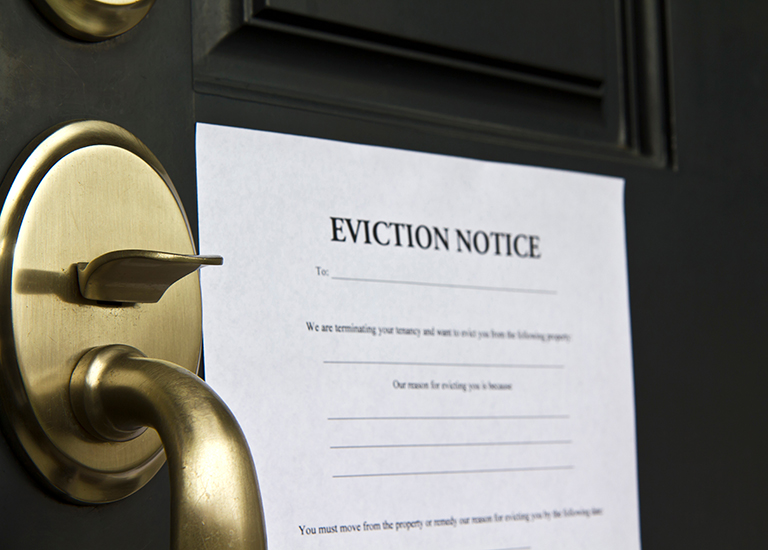
Four days before his rental was set to expire, Mr. Heffernan took a position that would tie up the property for years: he claimed the Residential Tenancies Act, 2006 applied to his occupancy, making him a protected tenant rather than a short-term guest. On April 30, 2020—one day before his booking ended—he filed an application with the Landlord and Tenant Board (LTB) and simply refused to leave.
The Long Road Through the LTB
Here’s where the timeline becomes painful for property owners to read: Mr. Heffernan’s LTB application wasn’t heard until May and August 2024—over four years after he filed it. Throughout this entire period, he continued living in the unit without paying a cent in rent.
In October 2024, the LTB finally dismissed his application, finding that he did not have a tenancy under the Act and that the parties had entered into a short-term occupancy agreement similar to Airbnb. Mr. Heffernan requested reconsideration, which was denied in November 2024.
The Superior Court Application
After the LTB decision, the owners issued a trespass notice under the Trespass to Property Act, but Mr. Heffernan still refused to leave. They then brought an application in Superior Court seeking possession, a writ of possession, and $68,364 in compensation (54 months at $1,266 per month).
Even before the Superior Court, delays continued. Mr. Heffernan requested multiple adjournments, citing vision and mental health disabilities and computer problems. Despite being given the applicants’ materials months in advance and receiving a 24-day extension to file his response, he failed to provide additional materials by the court-imposed deadline.
Notably, Justice Parghi observed that on the same day Mr. Heffernan claimed he couldn’t meet the deadline due to his disabilities, he managed to serve materials in support of an appeal of the LTB decision.
The Court’s Decision
Justice Parghi had no patience for further delay. The court found:
- The short-term rental contract unequivocally ended on May 1, 2020
- Mr. Heffernan had no legal authority to remain in the unit
- He was a trespasser with no interest in the property
- He had been unjustly enriched by living rent-free for 54 months while the owners suffered corresponding deprivation
The court also rejected Mr. Heffernan’s argument that his appeal of the LTB decision operated as an automatic stay of the Superior Court proceeding under the Statutory Powers Procedure Act. Justice Parghi noted the appeal appeared to be both out of time and on a question of fact (when only questions of law are permitted). Moreover, even if proper, such a stay would only apply to matters before the same tribunal, not to separate court proceedings.
Justice Parghi’s decision was released on June 2, 2025. The owners were granted possession with a writ effective 60 days from the decision date, along with judgment for $68,364 plus interest. Justice Parghi also found that the owners were entitled to their costs and directed the parties to resolve such issue, with the option to submit their respective briefs if they are unable to do so.
Key Takeaways for Real Estate Lawyers
- Document Everything: The clarity of the short-term rental contract was crucial. Make sure your clients’ agreements clearly specify the temporary nature of the occupancy and end dates.
- Know the Jurisdictional Landscape: The LTB found it had no jurisdiction because this wasn’t a residential tenancy under the Act. The Superior Court retained jurisdiction over the trespass and unjust enrichment claims.
- Beware the LTB Backlog: The four-year delay in getting an LTB hearing was catastrophic for these owners. Consider whether parallel proceedings in Superior Court might be appropriate in certain circumstances. The Superior Court has the power to assert its jurisdiction even where a tenant has applied to the LTB.
- Unjust Enrichment Claims Work: The court had no difficulty finding all three elements: enrichment (rent-free occupancy), corresponding deprivation (loss of use and rental income), and absence of juristic reason (no tenancy, just trespass).
- Procedural Tactics Have Limits: While courts will accommodate legitimate needs, Justice Parghi’s decision shows that judges will eventually draw the line when delay appears tactical rather than necessary.
The Bottom Line
This case is a sobering reminder that the short-term rental market carries significant risks. A one-month Airbnb booking resulted in five years of lost rental income, substantial legal fees, and ongoing frustration for the property owners.
For transactional lawyers advising clients on short-term rental properties, this decision underscores the importance of clear contractual language, understanding the interplay between the LTB and Superior Court, and having contingency plans for guests who refuse to leave. The gap between when a short-term rental ends and when you can actually regain possession may be measured not in days or weeks, but in years.
